Few contemporary South African artists have achieved the international recognition of William Kentridge.
Known for his charcoal drawings, animated films, installations, and theatrical works, Kentridge has become one of the most important voices in contemporary global art.
His work is emotional, political, layered, and deeply human.
More importantly, it demonstrates how South African contemporary art continues influencing the international art world.
Who is William Kentridge?
William Kentridge was born in Johannesburg, South Africa, in 1955.
Originally trained in politics and theatre before fully pursuing art, Kentridge developed a distinctive visual language combining:
- Drawing
- Animation
- Performance
- Film
- Printmaking
Today, his work is exhibited in major museums and galleries across the world and is considered foundational within contemporary African art.
What Makes William Kentridge’s Art Unique?
Kentridge is best known for his expressive charcoal drawings and animated sequences created through repeated erasure and redrawing.
This process leaves visible traces behind:
- Smudges
- Ghost marks
- Layered movement
- Emotional residue
Rather than hiding the process, Kentridge makes the process part of the artwork itself.
This gives his work a feeling of memory, movement, and imperfection.
The Importance of Charcoal and Gesture
Unlike polished digital imagery, Kentridge’s work feels physical and immediate.
His charcoal technique creates:
- Raw texture
- Emotional atmosphere
- Human vulnerability
- Visible artistic gesture
The erased marks become symbolic of memory, history, and transformation.
This tactile quality is one of the reasons collectors and institutions continue valuing his work so highly.
William Kentridge and Expressionism
Although often described as a conceptual artist, strong Expressionist elements exist throughout Kentridge’s work.
His drawings embrace:
- Distortion
- Emotional tension
- Fragmentation
- Movement
- Psychological depth
Like many Expressionist artists, Kentridge prioritises emotional experience over visual perfection.
His works are not static representations.
They feel alive, unstable, and constantly shifting.
South African Identity and Global Relevance
A major reason William Kentridge became internationally respected is because his work remains deeply connected to South African history and identity while speaking to universal human themes.
His art explores:
- Memory
- Power
- Conflict
- Human vulnerability
- Political history
- Personal responsibility
This combination of local context and global emotional relevance gives his work exceptional depth.
Why Collectors Value William Kentridge
Collectors and museums value Kentridge because his work combines:
- Strong artistic identity
- Technical uniqueness
- Emotional intelligence
- Historical significance
- International relevance
His works exist within both:
- Fine art collections
- Major institutional collections
As contemporary African art continues gaining international attention, Kentridge remains one of its most recognised figures.
Contemporary South African Art on the Global Stage
Artists like William Kentridge helped elevate South African contemporary art internationally.
Today, global collectors increasingly seek:
- Original visual language
- Emotional authenticity
- Contemporary expression
- Strong narrative depth
This growing attention has opened space for emerging South African artists to build international collector interest.
JAN and Contemporary Expressionist Painting
Contemporary South African artists continue evolving expressive visual language in new directions.
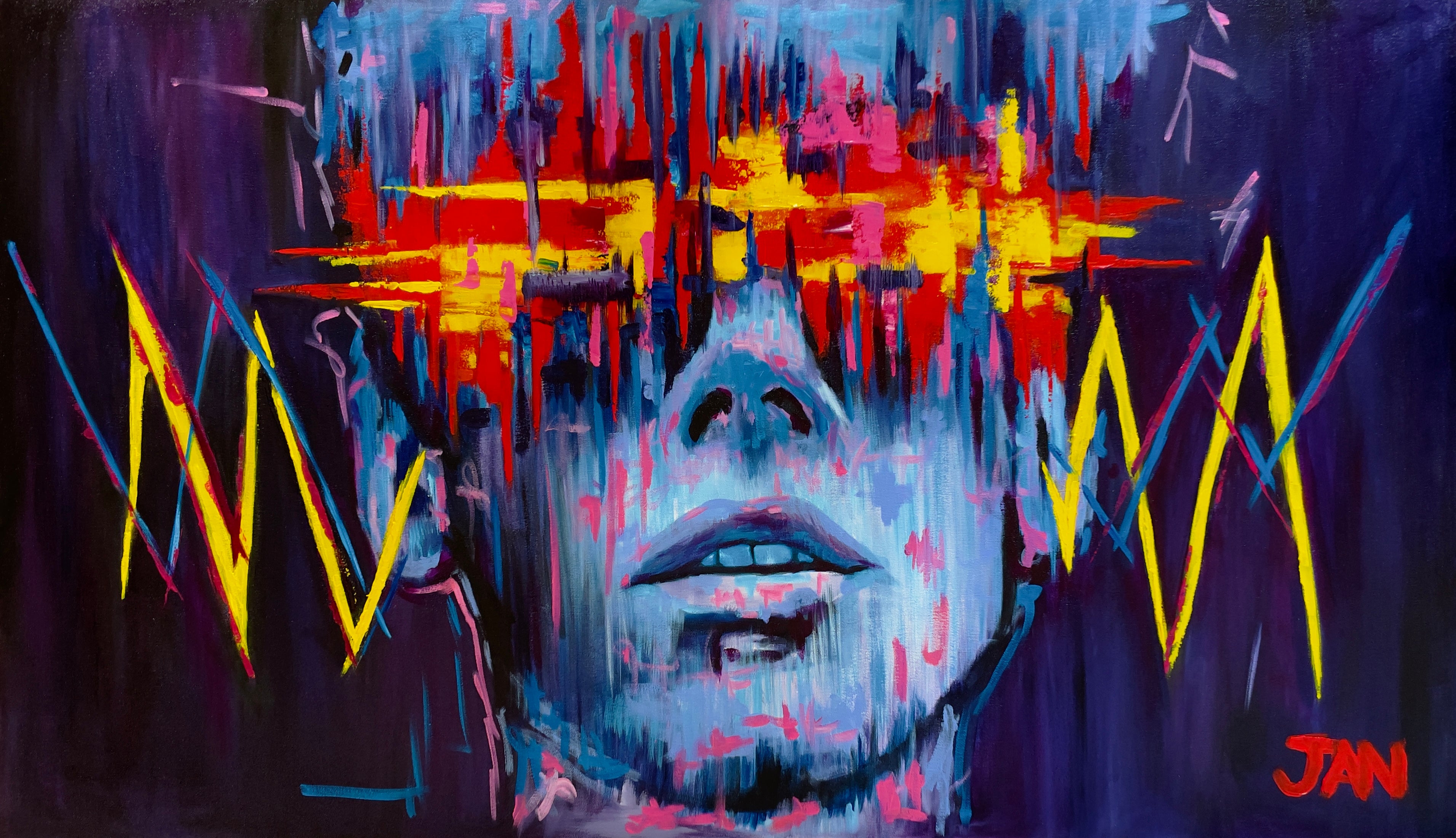
JAN’s work explores:
- Human energy
- Fragmentation
- Emotional movement
- Disrupted form
- Physical brushwork
Through expressive oil paintings and layered figurative compositions, JAN creates emotionally charged works that connect with the same contemporary interest in movement, vulnerability, and human tension.
Works such as:
reflect a contemporary expressionist approach grounded in emotion and physical presence.
Why Emotional and Physical Art Still Matters
In an increasingly digital world, collectors continue responding strongly to physical, emotionally driven artwork.
Artists like William Kentridge demonstrate the lasting power of:
- Gesture
- Texture
- Imperfection
- Process
- Emotional honesty
This human quality is what keeps expressive contemporary art deeply relevant.
Final Thoughts
William Kentridge remains one of the most important figures in contemporary South African art.
His work proves that drawing, gesture, and emotional storytelling continue carrying immense power within modern art.
For collectors, artists, and viewers alike, his influence extends far beyond technique. It represents the ability of art to remain human, vulnerable, and emotionally alive.